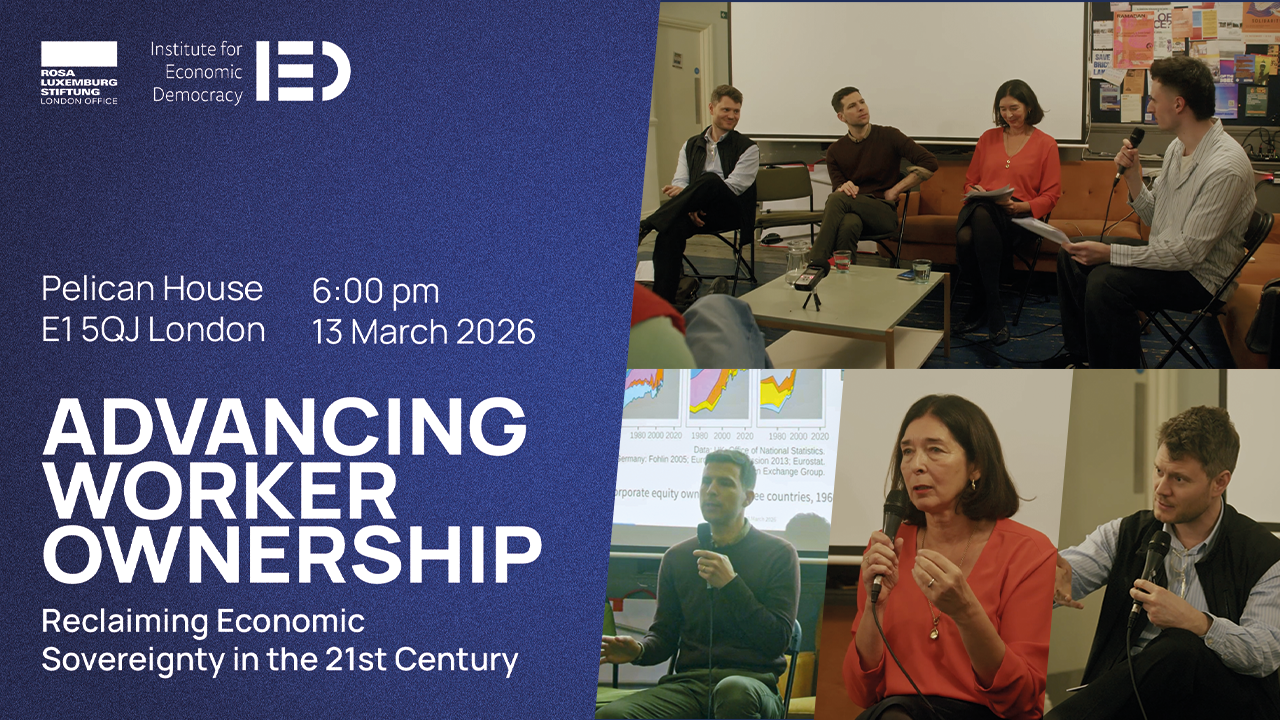
What does employee ownership look like today, what is the scale of this phenomenon, and why is support for such companies emerging among both left- and right-wing politicians?
When employee-owned businesses are mentioned, most Slovenians probably react either with suspicious mockery or nostalgic melancholy, thinking of social ownership and self-management in former Yugoslavia.
Yet today this idea lives on in quite different forms, not only in some of the remaining self-proclaimed socialist countries, but also in the Western centres of capitalist development – for example in the United States, the United Kingdom, Canada and Germany. In Italy, Spain and Denmark, employee ownership is also expanding, and it is now beginning to emerge in Slovenian companies as well. The Slovenian government has recently approved the concept of the Employee Ownership Cooperative Act.
So where does this idea come from – an idea that many believed had been buried with the fall of the Berlin Wall? What does worker co-ownership look like today? Why do companies choose it, and what are its benefits and challenges? And why are ideas of employee co-ownership gaining increasing support among politicians on both the right and the left, while even some major financial investors have begun to take an interest in such companies?
These are some of the questions we will discuss in this week’s Intellecta. Joining us at the microphone will be representatives of two employee-owned companies: Primož Kokalj, Director of Labels in Žiri, a company that was purchased by its workers during the period of privatisation, and Sašo Muhič Pureber from the company Inea, which has recently transitioned to a new model of employee co-ownership.
The discussion will also feature Dr Tej Gonza, economist and researcher at the Faculty of Social Sciences in Ljubljana, and Kosta Juri, Head of Research at the Institute for Economic Democracy.
The programme was produced by Alja Zore.